
How to Use Analytics Tools to Track Marketing ROI Effectively
Introduction
In 2026, successful digital marketing requires more than creative ideas or frequent posting; it requires measurable performance. Businesses today depend heavily on insights that show what is working, what needs improvement, and where the greatest opportunities lie. Without accurate reporting, even the best strategies can lose direction.
This is why analytics tools have become essential for brands aiming to improve their performance and maximize returns. With the help of digital marketing analytics and marketing performance tracking, businesses can understand customer behavior, evaluate campaigns with precision, and make decisions that support long-term growth.
Why Marketing ROI Matters More Than Ever
Marketing ROI reveals the actual value a business gains from its marketing investment. It shows whether campaigns attract the right audience, convert effectively, and deliver meaningful results. Businesses no longer rely on assumptions or guesswork; they use data to determine which platforms, messages, or formats drive the highest value.
Strong ROI ensures that marketing budgets are used wisely. When companies measure ROI consistently, they can allocate resources to high-performing channels and reduce spending on campaigns that do not contribute to growth.
The Role of Analytics Tools in Modern Marketing
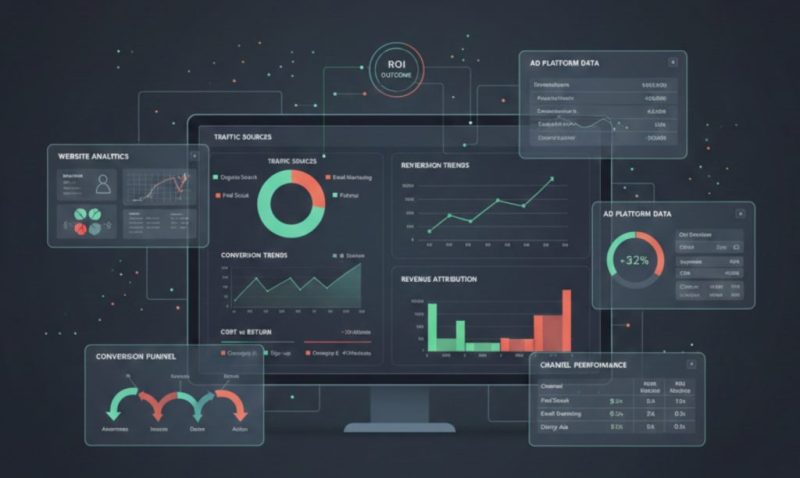
Analytics tools transform raw data into meaningful information. These platforms reveal patterns, highlight user behaviour, and uncover hidden opportunities. From website traffic to ad performance, analytics provide a clear view of how audiences interact with a brand. Modern tools also combine real-time tracking with predictive insights, helping businesses refine their strategies with greater accuracy.
Whether a brand wants to evaluate customer journeys, measure conversions, track engagement, or understand demographics, analytics tools offer detailed visual dashboards and reports that simplify decision-making.
Key Metrics That Influence ROI Evaluation
Analytics tools deliver valuable metrics that help businesses understand the health and performance of their marketing efforts. Some of the most important include:
- Conversion Rate
This metric shows how many users take the desired action, such as making a purchase, submitting a form, or booking a call. It indicates how effective campaigns are at turning interest into results. - Cost Per Acquisition (CPA)
CPA measures how much the business spends to acquire a new customer. A low CPA indicates strong efficiency and smart targeting. - Click-Through Rate (CTR)
CTR reflects how many users clicked on an ad or link. Higher CTR means the content resonates well with the audience. - Customer Lifetime Value (CLV)
CLV reveals how much revenue a customer generates over time. Understanding CLV helps businesses focus on high-value clients. - Bounce Rate
This metric shows how many visitors leave a website without exploring further. High bounce rates often indicate poor user experience, irrelevant content, or delayed loading time.
By reviewing these metrics regularly, businesses can identify strengths, spot weaknesses, and make informed marketing decisions.
How to Use Google Analytics for ROI Tracking
Google Analytics remains one of the most powerful tools for measuring digital performance. With advanced tracking features, it provides insights into traffic sources, user interests, conversion paths, and more.
- Understanding Traffic Sources
Businesses can see exactly where visitors come from, organic search, ads, social media, email, or referrals. This helps identify which channels drive the most valuable traffic. - Monitoring User Behaviour
Heat-maps, session recordings, and behaviour flow diagrams show how users interact with a website. Brands can understand which pages attract the most attention and where visitors drop off. - Setting Conversion Goals
Google Analytics allows businesses to set goals such as purchases, sign-ups, or clicks on specific buttons. Tracking these goals helps measure the success of campaigns directly linked to conversions. - Evaluating Campaign Performance
Businesses can compare performance metrics across multiple campaigns, helping them understand which strategies, keywords, or creatives deliver the best results.
Using Social Media Analytics to Measure ROI
Platforms like Facebook, Instagram, LinkedIn, and TikTok offer built-in analytics dashboards that highlight audience interaction, engagement rates, and demographic details.
- Engagement Trends
Social media analytics show how users respond to content. Likes, comments, shares, saves, and video views reveal what works best. - Audience Insights
These tools show the age, location, interests, and online habits of followers. Understanding demographics helps refine targeting and messaging. - Content Performance
Every post can be evaluated for reach, impressions, and interactions. Businesses can compare results to determine which formats, videos, reels, carousels, or single images drive engagement. - Ad Reporting
Paid campaigns include detailed reports that highlight conversion paths, click-through rates, cost efficiency, and return on ad spend (ROAS). Using these insights, businesses can design better content, improve targeting, and optimize their social media strategy.
Email Marketing Analytics for ROI Improvement
Email remains one of the strongest marketing channels. Tools like Mailchimp, Klaviyo, and HubSpot offer detailed analytics that support ROI evaluation.
- Open Rate
Shows how many recipients opened the email. Low open rates may indicate weak subject lines or poor segmentation. - Click Rate
Reflects user interest by showing how many clicked on links inside the email. - Unsubscribe Rate
A high unsubscribe rate signals irrelevant content or poor frequency. - Conversion Rate
Indicates how many email readers completed the desired action.
These metrics help refine campaigns and create content that builds stronger user relationships.
Leveraging CRM Tools for Deeper ROI Analysis
CRM systems such as HubSpot, Zoho, or Salesforce help businesses track customer journeys and understand long-term value. These platforms connect marketing touchpoints with sales activity, making it easier to measure actual outcomes.
CRM insights reveal:
- Which channels drive the highest-converting leads
- Which campaigns bring in long-term customers
- How quickly leads move through the sales funnel
By integrating CRM data with marketing analytics, businesses gain a complete view of ROI.
How Attribution Models Improve Accuracy
Attribution models show which marketing touch-points contribute most to conversions. Without proper attribution, businesses may misjudge campaign results.
Popular attribution models include:
- First-click attribution
- Last-click attribution
- Multi-touch attribution
- Time-decay attribution
These models offer different perspectives, helping businesses evaluate performance at every stage of the customer journey.
The Importance of Real-Time Monitoring
Real-time analytics allow businesses to adjust their strategy instantly. Whether an ad is underperforming or a campaign is trending unexpectedly, immediate insights provide flexibility. Real-time monitoring helps brands:
- Pause ineffective campaigns
- Increase budgets for high-performing ads
- Quickly resolve issues affecting conversions
- Respond faster to changing customer behaviour
This agility enhances ROI and strengthens overall marketing effectiveness.
Building a Culture of Data-Driven Decision Making
Businesses that rely on intuition risk losing opportunities. When teams build a culture centred on clear metrics, performance improves. Regular reporting, dashboard reviews, and performance discussions help teams stay aligned. A data-driven culture ensures that creativity and analytics work together, leading to smarter strategies and better long-term outcomes.
Conclusion
Tracking marketing ROI effectively is no longer a complex task; it is an essential practice for brands aiming to grow in a competitive digital environment. By using tools designed for marketing analytics and performance measurement, businesses can understand their audience, evaluate campaigns with precision, and allocate their budgets strategically. Analytics tools provide clarity, highlight opportunities, and reveal the strongest paths to success.
With consistent tracking, brands improve visibility, strengthen customer relationships, and amplify their overall marketing impact. As digital marketing becomes more advanced, embracing analytics will be the key to smarter decisions, stronger performance, and sustainable business growth.


