
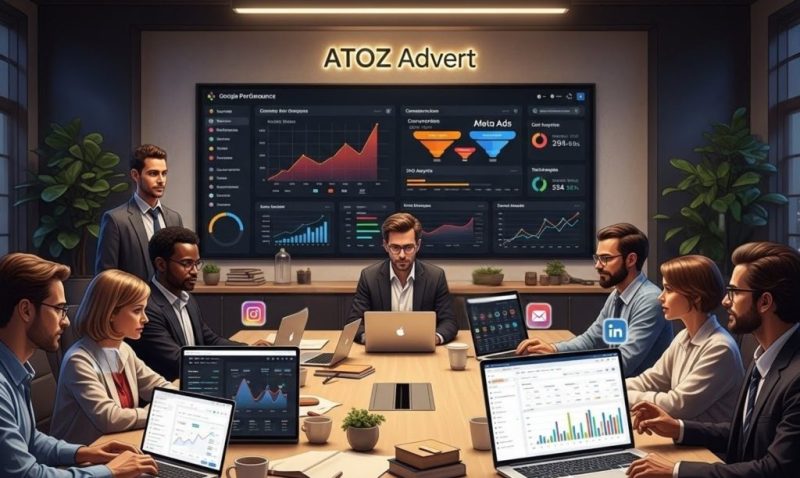
How AtoZ Advert Builds Multi-Platform Campaigns That Convert
Introduction
Modern businesses can no longer rely on a single digital channel to grow. Customers move between platforms, compare brands, read reviews, watch videos, and interact with content across multiple touchpoints before making a decision. In this competitive environment, the brands that win are the ones running well-structured, intelligently designed multi-platform campaigns powered by digital marketing services and performance marketing strategies that work cohesively instead of in silos.
Multi-platform marketing allows businesses to appear everywhere their ideal customers spend time, from search engines to social media to display networks. But success depends on a smart approach, consistent messaging, tailored creative, and precise targeting. That’s where a refined, data-led campaign structure becomes essential.
This blog explains how a strong digital agency builds multi-platform campaigns that convert, combining creativity, analytics, strategic planning, and advanced optimisation to deliver measurable results.
Understanding How Multi-Platform Campaigns Work
A multi-platform campaign integrates multiple digital channels so customers can interact with a brand at every stage of the buying journey. Instead of focusing on a single platform, the campaign uses several in harmony.
This approach works because customers rarely convert after a single touch-point. They may see a short video, then search for more information, then click a display ad, then return through re-targeting. A multi-platform strategy makes every step feel natural and connected.
Step 1: Defining the Purpose, Audience, and Buying Journey
Before launching any multi-channel campaign, defining the foundation is essential.
This includes understanding:
- The core marketing objective
- The audience’s demographics, interests, and behaviours
- The typical customer journey
- The emotional and logical triggers that drive decision-making
Every campaign begins with clarity. Without a precise direction, the content loses purpose, the ads lose impact, and the message becomes diluted across platforms. A strong foundation ensures every piece of the campaign supports the same strategic goal.
Step 2: Crafting a Consistent Message Across All Channels
Consistency is what makes a multi-platform campaign feel unified. Customers should instantly recognise the brand whether they see a search ad, a social ad, a story, or a video.
The brand voice, creative style, offer, and message must align across platforms. However, consistency does not mean duplication. Each platform has its own style, content behaviour, and user expectations. The message is unified, but the format is tailored.
Step 3: Tailoring Creative for Each Platform’s Strengths
Every channel has a different purpose and unique content style. High-performing campaigns respect these differences.
For example:
- Short-form videos thrive on TikTok and Instagram Reels
- Visual inspiration performs well on Pinterest
- Testimonials and detailed content thrive on Facebook and YouTube
- Search ads capture high-intent users on Google
- Display campaigns support awareness and re-targeting
A multi-platform campaign works because each creative asset is designed specifically for the channel where it appears, ensuring maximum relevance and engagement.
Step 4: Building Data-Led Targeting That Matches User Intent
The most effective campaigns understand that users across platforms behave differently. A platform-specific targeting structure ensures the brand reaches the right people with the right message at the right moment.
Examples include:
- Search intent targeting
- Lookalike audiences
- Interest-based audiences
- Re-marketing audiences
- Behavioural and demographic segmentation
This layered approach ensures strong reach during the awareness stage, high relevance during the consideration stage, and high conversions during the decision stage.
Step 5: Creating a Strong Cross-Channel Re-targeting System
Re-targeting is the backbone of a multi-platform campaign. Customers may see the brand multiple times before they finally convert. A strong retargeting system includes:
- Website visitors
- Video viewers
- Engaged users
- Abandoned carts
- Landing page visitors
- Lead form openers
By reconnecting with warm audiences, the campaign increases conversions while lowering overall cost per acquisition.
Step 6: Building High-Converting Landing Pages
Even the strongest multi-platform campaign fails without a landing page that converts. The landing page must match the tone and promise of the ads. High-performing landing pages include:
- A clean layout
- Clear value statements
- Strong call-to-action
- Fast loading speed
- Scannable sections
- Social proof and testimonials
- Conversion-focused design
This ensures every click leads to a smooth, compelling, and trustworthy experience.
Step 7: Combining Organic and Paid Efforts
The best results come from blending both short-term and long-term growth strategies. Multi-platform campaigns integrate:
- Paid ads for instant visibility
- Organic content for trust-building
- Social storytelling for brand personality
- Search optimisation for long-term traffic
- Email nurturing for lead retention
This holistic approach keeps the brand active across multiple touch-points and helps maintain long-term engagement.
Step 8: Tracking, Analytics, and Performance Optimization
A multi-channel campaign is only effective when monitored continuously. Real-time performance data helps adjust the creative, targeting, budget allocation, and messaging.
Key metrics typically include:
- Conversion rate
- Cost per lead or cost per purchase
- Engagement rate
- Click-through rate
- Audience quality
- Platform-specific performance differences
Continuous optimisation ensures that the campaign evolves with customer behaviour and remains cost-efficient.
Step 9: Scaling Campaigns with Proven Data
Once the campaign reaches a stable performance level, scaling begins. Scaling is not about simply increasing the budget; it requires strategic expansion.
Scaling may include:
- Adding new audiences
- Increasing daily budgets
- Expanding into additional platforms
- Introducing new creative variations
- Incorporating seasonal campaigns
- Enhancing re-targeting layers
Scaling ensures the campaign grows predictably without losing performance quality.
Step 10: Building Long-Term Campaign Ecosystems
The final stage is transforming a campaign into a long-term ecosystem. This is where the brand creates repeatable, scalable structures that drive results month after month.
This ecosystem includes:
- Brand awareness loops
- Re-targeting funnels
- Conversion-focused funnels
- Loyalty and retention strategies
- Periodic creative refresh cycles
- Ongoing keyword and audience updates
A well-built ecosystem ensures that results are not temporary; they become consistent and long-lasting.
Conclusion
Multi-platform marketing has become the most effective way for businesses to reach customers, create meaningful engagement, and drive consistent conversions. When supported by digital strategy development and multi-channel advertising, this approach gives small businesses the power to appear everywhere their customers are, with the right message and at the right moment.
A successful multi-platform campaign blends creativity, data, storytelling, and targeted execution into one unified system. With the right structure, businesses can build predictable growth, stronger brand visibility, and deeper customer trust. The future belongs to brands that understand how to combine multiple platforms into a seamless journey, and now is the perfect time to invest in this approach for long-term digital success.


